
Few places in New Zealand stop you the way Central Otago does. Tawny schist rock, sun-bleached tussock, and deep glacial lakes sit alongside some of the world’s southernmost vineyards – a combination that feels almost implausible. This is cool-climate Pinot Noir country, but it’s also a region of gold-rush ghost towns, cherry orchards, and gorges that seem carved by something angrier than water. The article ahead moves through the terrain, cellar doors, and small communities that give Central Otago its particular character.
Why Central Otago Feels Distinct From New Zealand’s Other Wine Regions
Landlocked and dramatic, this is wine country that looks nothing like Marlborough or Hawke’s Bay. Sitting deep in the South Island’s interior, Central Otago is the world’s southernmost commercial wine region, ringed by the Remarkables and the Dunstan Mountains, cut through by the Clutha River. The elevation runs between 200 and 450 metres. Summers burn hot, winters freeze hard, and that extreme range is exactly what gives the wines – Pinot Noir especially – their tension and depth.
The region divides into distinct subareas, each shaped by its own microclimate and terrain. Bannockburn, Cromwell, Wanaka, Gibbston Valley, and Alexandra all offer different experiences, and the scenery shifts noticeably between them.
A Cool-Climate Region With Surprising Heat
Schist rock and tussock grassland dominate the visual character here. The dry continental climate means almost no humidity, which keeps disease pressure low in the vineyards and concentrates flavour in the fruit.
Pinot Noir as the Region’s Defining Wine
No other variety has shaped Central Otago’s identity as completely. The combination of warm days, cold nights, and free-draining schist soils produces Pinot Noir with vivid cherry fruit, firm structure, and a savouriness that serious wine drinkers travel specifically to taste.
Vineyards That Capture the Region’s Character
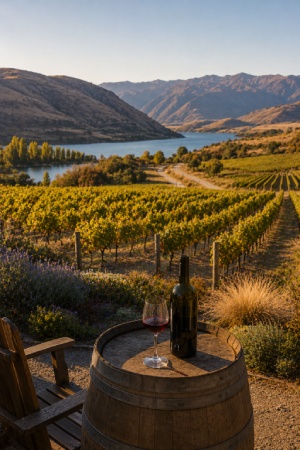
Choosing where to stop isn’t just about reputation. Mood, route, and what you’re hoping to feel at the end of a gravel driveway all matter here. Central Otago’s sub-regions each pull in a different direction, and the wines reflect that honestly.
Gibbston Valley: Schist and Shadow
Carved into a narrow gorge where afternoon sun barely lingers, Gibbston produces some of New Zealand’s most elegant cool-climate Pinot Noir. Chard Farm and Peregrine both offer cellar doors worth slowing down for. The wines tend toward restraint – fine tannins, earthy depth – and pair surprisingly well with aged hard cheeses from local producers.
Bannockburn and the Cromwell Basin
Drier, warmer, and almost otherworldly in its bare terrain, Bannockburn rewards visitors who prefer their Pinot richer and more structured. Felton Road is the benchmark name, though Mount Difficulty’s tasting room, with its wide views over the basin, makes the stop feel complete in itself.
Small Towns and Landscapes Worth Building a Trip Around
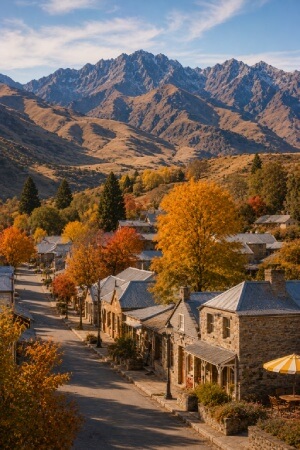
Rushing through Central Otago would be a genuine mistake. The region rewards a slower pace, one built around unhurried drives through river gorges and schist-rock terrain, with proper time spent in each town rather than a quick pass-through. Each stop adds something distinct.
Arrowtown
Tucked beneath the Remarkables, this former gold-rush settlement has kept its nineteenth-century character remarkably intact. Buckingham Street’s stone cottages now house good restaurants and independent bookshops, while the Lakes District Museum traces the Chinese miners’ quarter nearby. Autumn turns the sycamores amber and gold.
Cromwell and Alexandra
Cromwell sits at the confluence of two rivers, surrounded by stone fruit orchards that sell cherries roadside in summer. Alexandra is quieter, a working town with serious cycling trails along the Clutha River and a clock on the hillside visible from most of town.
Wanaka
Lakefront and genuinely beautiful, Wanaka earns its reputation without trying too hard. Roy’s Peak above town delivers one of the South Island’s more spectacular ridge walks, and the lake itself stays calmer than Queenstown’s busier waterfront.
Central Otago Rewards Travelers Who Linger
There’s a reason people who visit Central Otago once tend to come back. The vineyards, the schist-rock gorges, the unhurried towns – none of it works in isolation. Cromwell’s stone fruit stalls sit minutes from serious Pinot Noir producers. Clyde’s heritage streetscape leads naturally toward Bannockburn’s sun-scorched vines. Naseby exists at the kind of quiet remove that makes you reconsider your itinerary entirely. The region asks you to slow down, take a side road, stay an extra night somewhere small. Do that, and what you get isn’t just good wine or dramatic scenery – it’s a place that feels genuinely coherent, where the land, the people, and what they grow are all telling the same story. Few wine regions anywhere manage that so naturally.